


Desview TP300 19″ Portable Teleprompter
Call for price
19″ Monitor
Portable Design
Self-Reversing Monitor
High-Quality Mirror
Adjustable Height and Angle
Remote Control
Reduces Glare
Supports VGA, HDMI etc.
Related Products
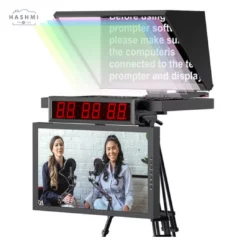
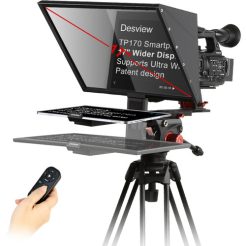
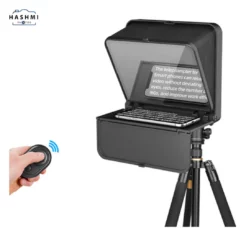
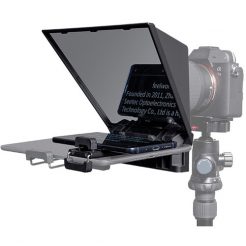
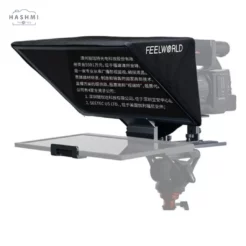
Desview 19″ Portable Teleprompter Overview
The Essential Teleprompter Setup
A Portable Teleprompter is a key tool in delivering seamless presentations or broadcasts. Its setup primarily includes three components: a camera, a mirror, and a monitor. The mirror, a specially designed reflective glass, is positioned in front of the camera lens. Below this, the monitor displays the scrolling script. The mirror reflects this text so a presenter, such as a newscaster, can read it while looking directly into the camera lens. This arrangement allows for natural eye contact with the audience, eliminating the need to memorize scripts or glance at cue cards. The mirror, often referred to as a beam splitter mirror or simply “glass,” plays a vital role in this process.
How the Camera Captures the Presenter
You might wonder how a camera records a presenter with a mirror in front of it. The answer lies in the unique design of the mirror, which is partially transparent. Similar to two-way security mirrors, it reflects the text for the presenter while allowing the camera to see through it. High-quality Portable Teleprompter mirrors are engineered to prevent the camera from capturing any reflected text, ensuring clear footage.
The Mirror: The Backbone of a Quality Portable Teleprompter
The heart of any Portable Teleprompter lies in its mirror. High-end mirrors are crafted from pure optical-grade glass with advanced beam splitter coatings. These coatings allow cameras to record in high resolution, including 4K or above, without distortion. Conversely, lower-grade mirrors made from impure glass lack this precision, impacting video quality. While premium teleprompters often come equipped with better mirrors, some mid-range models also feature excellent glass, demonstrating a focus on quality across various price points.
The Monitor and Teleprompting Software
Teleprompter monitors display the script transferred from teleprompting software. Users compose scripts in applications like MS Word, import them into the software, and send them to the monitor using a VGA cable or a similar connection. Monitors often support multiple input formats, including VGA, to ensure compatibility.
The software reverses the script on the monitor so it reflects correctly on the mirror. Although some monitors can perform this reversal independently, this feature is less common. Typically, the script is displayed in bright text on a dark background, enhancing readability.
Popular Use Cases for Teleprompters
Teleprompters are widely used by professionals across industries. Newscasters, award show hosts, and politicians—like Presidents during Oval Office speeches—rely on teleprompters to maintain consistent eye contact with their audiences. More recently, YouTube creators and other content producers have also adopted teleprompters to enhance their presentations.
Workflow Between the Speaker and Operator
In professional setups, a teleprompter operator manages the script’s scrolling speed in real time, aligning it with the presenter’s speaking pace. For example, when audience applause causes a pause, the operator stops the scroll and resumes it once the applause subsides. Operators can also edit scripts during live presentations or manage prompter movement for dynamic “walk-and-talk” presentations.
For single-user setups, especially in recorded sessions, presenters often use pre-set scrolling speeds or control the script via remote devices. However, live events typically require an operator for optimal coordination.
Varieties of Teleprompters
There are three primary types of teleprompters: through-the-lens, mobile, and presidential. Each serves unique needs while relying on the same basic principle of reflecting text for presenters.
- Mobile Teleprompters use tablets or smartphones instead of traditional monitors. These compact setups are convenient for on-the-go use, requiring only a prompting app to display scripts. Many mobile prompters include Bluetooth remote controls for single-user operations.
- Presidential Teleprompters are specifically designed for speeches to live audiences. Their setup involves a mirror on a tall stand with the monitor positioned near the base. These prompters are used with two stands to help speakers address different parts of a large audience.
Mounting Options for Teleprompters
Teleprompters are typically mounted on tripods, offering platforms for the camera, mirror, and monitor. Studio setups may use pedestals for added stability and vertical movement, while ultra-compact mobile prompters often attach directly to a camera lens. Presidential prompters use specialized stands designed for large event settings.
Key Teleprompter Features to Consider
- Monitor Size: Teleprompter monitors range from 15 to 24 inches, directly correlating to the size of the mirror.
- Reading Range: The maximum distance from which a presenter can clearly read the text depends on font size and the presenter’s vision.
- Power Requirements: The monitor is the only component that requires external power.
- Hoods and Shrouds: Many teleprompters come with a hood to block stray light and enhance visibility.
- Cue Lights: Studio prompters often include cue lights to signal when to begin speaking.
A Glimpse into Teleprompter History
The modern teleprompter originated in the late 1940s, developed by Hubert Schlafly, Irving Kahn, and Fred Barton Jr. Their initial designs featured motorized scrolls of paper, a far cry from today’s digital displays. Over time, the addition of mirrors and advanced optics revolutionized the concept, making teleprompters indispensable across entertainment, politics, and other fields.
FAQs For Desview 19″ Portable Teleprompter
1. What is a teleprompter, and how does it work?
A teleprompter is a device used to display scrolling text, enabling presenters to deliver speeches or presentations seamlessly. It consists of a camera, a partially transparent mirror, and a monitor. The script on the monitor reflects on the mirror, allowing the presenter to read it while maintaining direct eye contact with the audience or camera.
2. Why doesn’t the camera capture the reflected script?
Teleprompters use a beam splitter mirror, which is designed to reflect text for the presenter while allowing the camera to see through it. This ensures the camera records only the presenter without capturing the text.
3. What types of mirrors are used in teleprompters?
High-quality teleprompter mirrors are made from optical-grade glass with specialized coatings for clarity. These mirrors allow seamless filming, even in 4K or higher resolution. Low-quality mirrors, often made from impure glass, lack these features and can reduce video quality.
4. How is the script displayed on the teleprompter monitor?
The script is composed in applications like MS Word, imported into teleprompting software, and then displayed on the monitor. The software reverses the script for proper reflection on the mirror, ensuring correct orientation for the presenter.
5. Who uses teleprompters?
Teleprompters are commonly used by newscasters, award show hosts, and politicians, such as Presidents during speeches. They are also popular among content creators like YouTubers and business professionals delivering presentations.
6. How does a teleprompter operator help during live presentations?
An operator manages the scrolling speed of the script to match the presenter’s pace, pauses for audience reactions, and edits text if needed. They may also control the teleprompter’s movement for dynamic presentations.
7. Can teleprompters be used without an operator?
Yes, single-user workflows allow presenters to control the script using pre-set scrolling speeds or remote controls. This is more common in recorded sessions without live audiences.
8. What are mobile teleprompters?
Mobile teleprompters use tablets or smartphones instead of monitors. They are portable, compact, and ideal for beginners or on-the-go content creators. Most require a prompting app and often support Bluetooth remote controls.
9. What is the difference between standard and presidential teleprompters?
Standard teleprompters position the mirror in front of the camera for direct eye contact with viewers. Presidential teleprompters, used for live speeches, have the mirror and monitor on a stand, helping speakers address a large audience while cameras capture the speech from various angles.
10. Do teleprompters come in different sizes?
Yes, teleprompter monitor sizes typically range from 15 to 24 inches. Larger sizes accommodate greater distances between the presenter and the monitor for enhanced visibility.
11. What additional features do teleprompters have?
Many teleprompters include hoods to block stray light, shrouds to secure the camera lens, and cue lights to signal presenters when to start speaking. These features improve usability, particularly in professional setups.
12. Who invented the teleprompter?
The teleprompter was invented in the late 1940s by Hubert Schlafly, Irving Kahn, and Fred Barton Jr. Initially using motorized paper scrolls, its design evolved over time to incorporate advanced mirrors and digital monitors.
Specification: Desview TP300 19″ Portable Teleprompter
|
User Reviews
Be the first to review “Desview TP300 19″ Portable Teleprompter”

Call for price

There are no reviews yet.